
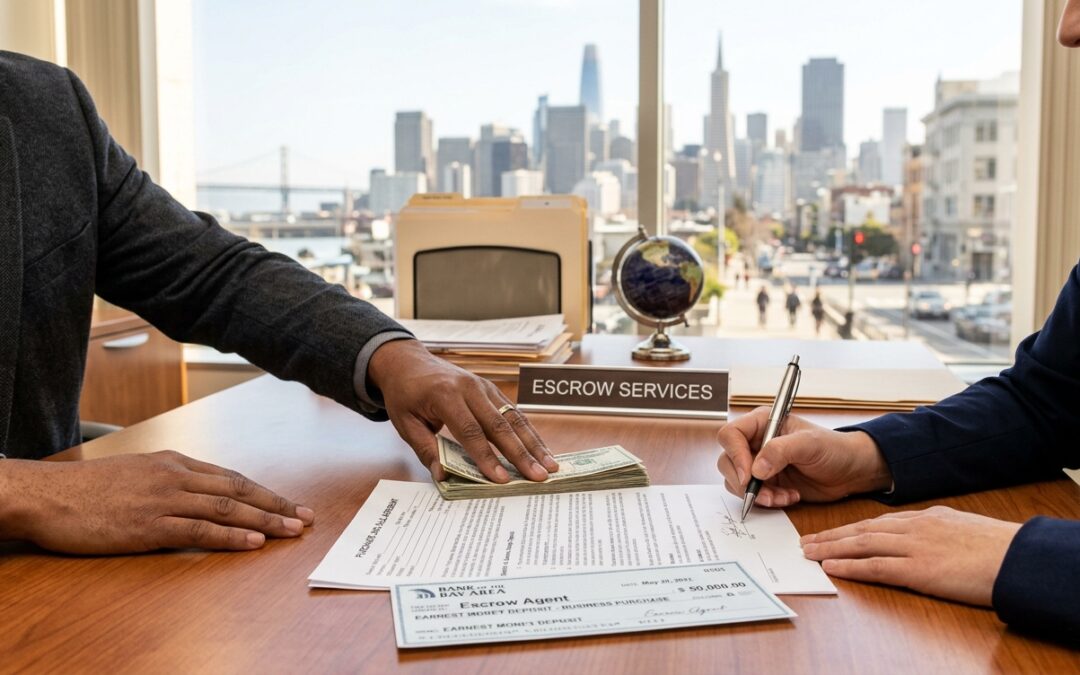
A business purchase earnest money deposit is one of the first real commitments a buyer makes after signing an agreement. The money shows the seller that the buyer is serious, but it should remain protected while due diligence gets underway. Knowing how the deposit works can spare both sides from confusion when deadlines, documents, and negotiations start piling up.
Why The Deposit Exists
A seller often takes a business off the market after accepting a buyer’s offer. During that time, the seller may pause conversations with other interested buyers and begin sharing private financial records. The deposit gives the seller some confidence that the buyer intends to move forward under the written deal.
For the buyer, the deposit is not a casual payment handed straight to the seller. It is usually placed with a neutral escrow holder according to the purchase agreement. Escrow holds the funds while the buyer reviews the business and the parties work through the conditions required for closing.
The amount varies from deal to deal. A small service business in Danville may have a different deposit structure than a restaurant in Oakland with equipment, inventory, and an ABC license. The contract should state the amount, the due date, and how the money will be credited at closing.
Business Purchase Earnest Money Deposit
A business purchase earnest money deposit is often called a good-faith deposit or initial deposit. It is paid into escrow after the buyer and seller sign the purchase agreement, and it is held there while the transaction moves forward. If the business sale closes, the deposit is usually applied toward the buyer’s purchase price.
The purchase agreement controls the rules. It should explain when the buyer must deliver the funds, what conditions protect the buyer, and what happens if the transaction does not close. Buyers should not rely on side conversations or vague promises when money is on the line.
Business contracts vary more than residential purchase forms. A business buyer may have a due diligence period, a financing condition, lease-assignment approval, license transfer approval, or other negotiated requirements. The terms must be written down so escrow has instructions to follow.
How The Money Gets Into Escrow
After the agreement is signed, escrow opens a file and provides deposit instructions. The buyer may deliver the money by wire transfer, cashier’s check, or another approved method. Buyers should always verify wire instructions directly with the escrow office using a trusted phone number.
The escrow holder records the deposit and confirms receipt. From there, the funds remain in the escrow account until closing, cancellation, or another event described in the written instructions. The buyer does not lose control of the money simply because it has been deposited, but release rules depend on the contract.
Do not wait until the last day to send the deposit. A delayed wire, bank hold, or simple typo can create stress that nobody needs. The contract deadline is the deadline, even if the buyer is still gathering documents or waiting for a lender update.
Bay Area Escrow helps business buyers and sellers manage funds in a neutral escrow account while the required transaction steps are completed. We follow signed instructions from the parties and do not act as an advocate for either side.
What Conditions Protect The Buyer
A buyer needs enough time to investigate the business before making the deposit fully at risk. This is where contingencies matter. A contingency is a condition that must be met, waived, or removed according to the contract before the buyer must fully commit to closing.
In a business purchase, common contingencies may cover financial records, lease assignment, lender approval, inventory review, permits, or license transfers. A restaurant buyer in San Francisco may need an ABC license transfer plan. A retail buyer in Walnut Creek may need the landlord to approve a lease assignment.
The buyer should understand the exact wording of each condition. “Due diligence” may sound broad, but the contract should say how long it lasts and what the buyer must do to cancel during that period. Missing a deadline can affect the buyer’s rights even if a real concern appears later.
The business transfer process often includes several moving parts that need to line up before close. A deposit may stay protected while those agreed conditions are active, but that depends on the language both parties signed.
Why Deadlines Matter More Than People Think
A contingency deadline can feel far away when escrow first opens. Then documents arrive late, the accountant needs more time, and the landlord has not returned a call. Suddenly, the deadline is tomorrow and the buyer is still trying to understand the seller’s payroll records.
A buyer should keep a written calendar with every due diligence, financing, lease, and license deadline. It also helps to ask the escrow officer which documents are still outstanding. Escrow can track the file, but the buyer is responsible for making business decisions and delivering notices required by the agreement.
If the buyer needs more time, an extension should be requested before the deadline passes. Both parties need to agree in writing to extend the time period. A verbal “that should be fine” does not change the escrow instructions or protect the deposit.
The same rule applies when a buyer decides to remove a contingency. That removal should be documented in writing. Once a buyer removes key protections, the deposit may become more exposed if the buyer later decides not to close.
When The Deposit May Be Returned
The deposit may be returned when the buyer cancels according to an active contract contingency and follows the required notice process. For example, a buyer may discover that the seller’s financial records do not support the purchase price. The buyer may also be unable to obtain a lease assignment or financing within the time provided.
The key is process. The buyer must act within the agreed time period and send the correct written notice. Escrow cannot decide that a buyer’s concern is valid or determine who deserves the money. Escrow follows the release instructions provided by the parties, or other legally binding direction.
A buyer should talk with their attorney about the specific contract terms before cancelling. Escrow officers do not provide legal advice, and business purchase agreements can include customized provisions that change how deposits are handled. The safest path is to understand those rules before the deposit becomes a dispute.
When The Seller May Claim The Deposit
A seller may seek the deposit if the buyer defaults after removing contingencies or misses a required closing obligation. The exact outcome depends on the purchase agreement, any liquidated damages language, and the written instructions governing escrow. It is not automatic simply because the seller is frustrated or the buyer changes their mind.
For example, a buyer might complete due diligence, remove the agreed conditions, and later decide that the business feels like too much work. If the buyer has no remaining contract right to cancel, the seller may make a claim to the deposit. The buyer and seller may agree on a release, or the dispute may need further legal resolution.
This is where things can get tense fast. Both sides often feel they have a fair point, and escrow cannot take sides. If the parties disagree, the funds usually stay in escrow until the parties provide mutual written instructions or a binding order directs release. Escrow agreements commonly use joint written instructions to control the release of funds.americandeposits+1
What Written Instructions Should Cover
Written escrow instructions should match the business purchase agreement as closely as possible. They should identify the buyer, the seller, the amount deposited, and the property or assets involved. They should also describe the conditions that must be completed before funds are released.
The instructions should address what happens if the buyer cancels during due diligence. They should also explain how the parties will handle a denied lease assignment, a delayed license transfer, or a financing issue. A business sale may include a lot more variables than a standard property purchase, so vague language is not helpful.
The instructions can also address how the deposit is credited at closing. Most buyers expect it to be applied toward the purchase price, but the final settlement statement should show that credit clearly. Buyers should review the statement before approving the final disbursement.
A detailed instruction package protects both sides because it gives escrow a reliable roadmap. When the deal changes, the parties should sign updated instructions or an amendment. The file cannot run on old terms when everyone has already agreed to new ones.
Deposits In Restaurant And Liquor License Deals
Restaurant purchases often require extra patience because an ABC license transfer may take longer than other closing tasks. The buyer may need to review financial records, arrange financing, negotiate a lease assignment, and begin the license process at the same time. The deposit terms should account for those realities.
The bulk sales and ABC license transfer process can involve notice periods, government clearances, and separate approval timelines. A buyer should not assume the business can close on the same schedule as a simple asset sale.
The purchase agreement may allow an extension if the license transfer remains pending despite timely effort. It may also describe what happens if the license is denied. These terms are important because the buyer may not want to own a restaurant that cannot legally serve alcohol as planned.
A seller should also understand how the timing affects the deposit. A buyer who is waiting for a government decision may not be dragging their feet. The contract should distinguish between a buyer’s failure to perform and an approval process outside either party’s control.
Deposit Disputes And How To Avoid Them
Most deposit disputes begin with unclear expectations. The buyer believes they have more time, while the seller believes the buyer already removed their protections. The parties may also disagree about what an email or verbal conversation meant.
The best way to avoid that mess is simple: put important changes in writing. If the closing date moves, sign an extension. If due diligence is extended, update the instructions. If the buyer is adding another deposit, document the amount and its release terms.
Buyers should also keep copies of notices, amendments, and emails related to key decisions. The goal is not to create a giant paper mountain. It is to make sure everyone can see what was agreed to if questions come up later.
A business purchase earnest money deposit should never be treated as an informal handshake. The escrow account protects the money, but the contract tells escrow what to do with it. That distinction matters when the deal gets complicated.
A Buyer’s Deposit Checklist
Use this checklist before and during escrow:
- Read the deposit section of the purchase agreement before signing.
- Confirm the amount, due date, and approved payment method.
- Verify wire instructions directly with the escrow office.
- Track every contingency deadline on one calendar.
- Request written extensions before a deadline passes.
- Keep copies of notices and signed amendments.
- Review the final settlement statement before closing.
This checklist helps buyers stay organized without pretending every deal is the same. A small business purchase may have a simple structure, while a larger commercial transaction may need more detailed instructions. Either way, the buyer should know where the deposit stands throughout the process.
FAQs
What is a business purchase earnest money deposit?
It is a good-faith deposit placed into escrow after the buyer and seller sign a business purchase agreement. The deposit is often credited toward the buyer’s purchase price when the transaction closes.
Is the deposit always refundable during due diligence?
Not always. Refund rights depend on the wording of the purchase agreement, the active contingencies, and whether the buyer follows the required notice process before the deadline.
Who holds the deposit during a business sale?
A neutral escrow holder usually keeps the funds in an escrow account. The escrow holder follows signed instructions and does not represent the buyer or seller.
What happens if the buyer misses a contingency deadline?
The buyer may lose a contractual protection, depending on the agreement. Buyers should consult their attorney about the effect of a missed deadline in their specific transaction.
Can escrow release the deposit when the parties disagree?
Usually not without mutual written instructions or another binding direction. Escrow holds the funds while the buyer and seller work toward a resolution.
Does a delayed ABC license transfer affect the deposit?
It can. The purchase agreement should explain how a pending or denied license transfer affects timing, cancellation rights, and deposit release for that transaction.
Put Your Deposit On Solid Ground
A well-managed escrow file gives your deposit a defined place while you investigate the business and work toward closing. Contact our team at Bay Area Escrow to discuss your business transaction. Call (925) 831-9099 and we will help keep the process organized.