
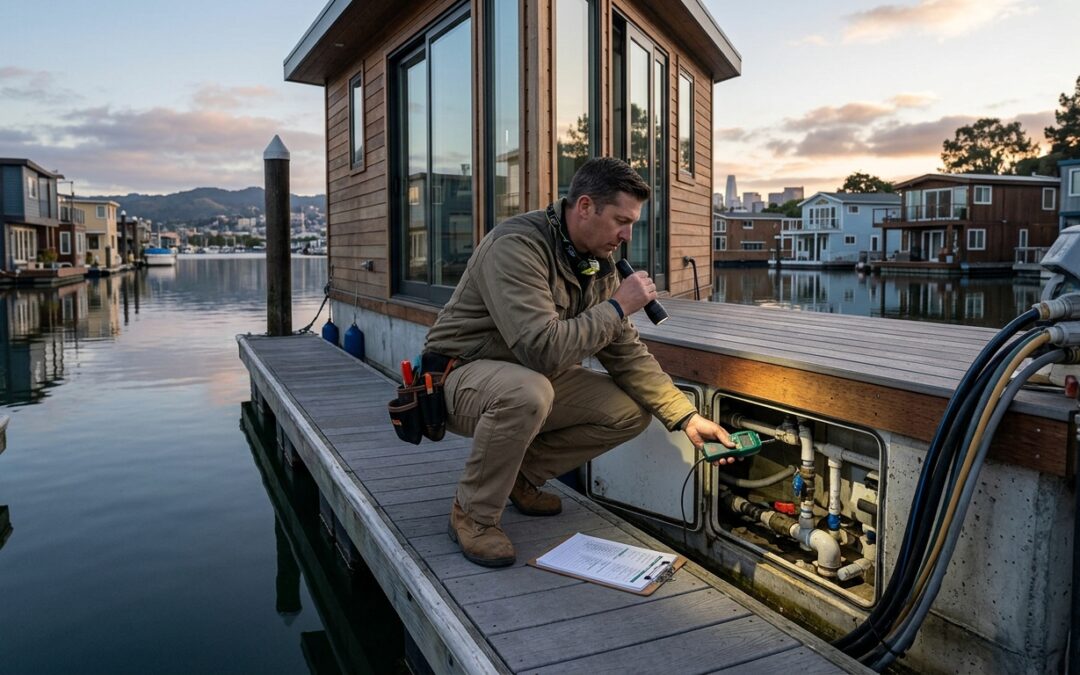
A floating home has charm, character, and a view that can make a buyer forget every practical question. A floating home inspection checklist brings the hidden systems back into focus before the offer turns into a major commitment. The house above water matters, but the parts below it often tell the more important story.
Why A Standard Inspection Is Not Enough
A regular home inspection covers visible issues inside the home and around its exterior. That is useful, but it does not tell you much about the float, the anchoring system, or utility lines below the dock. A floating home needs a broader inspection approach because its structure depends on more than walls and a roof.
Think of the home like an iceberg, minus the dramatic shipwreck scene. What is beneath the waterline matters as much as what you can see from the living room. Buyers should plan for a general home inspection plus a marine or float inspection before they remove contingencies.
A floating home inspection checklist gives buyers a better way to organize those reviews. It also gives them the right questions to ask before title transfer, insurance approval, or marina paperwork becomes urgent.
Floating Home Inspection Checklist
A strong floating home inspection checklist should cover the home, the float, the mooring setup, and the shore connections. Each part works with the others, so a problem in one area can affect the rest of the property. A great kitchen does not help much if the float needs major work.
The checklist should start with the home’s overall structure. Buyers should review the roof, windows, siding, flooring, plumbing fixtures, and electrical panel. Those are familiar items, but they still matter because moisture can affect materials faster around water.
Next comes the part many buyers skip. A qualified marine surveyor or diver can inspect underwater portions that a standard home inspector cannot see. The float, mooring chains, attachment points, and underwater utility lines all need a close look.
Floating home inspection checklist planning should happen early in the due diligence period. If a buyer waits until the deadline is close, there may not be enough time to schedule the right specialist. That can leave the buyer making a costly decision without the full picture.
Start With The Float
The float supports the entire home, so its condition deserves serious attention. Older floating homes may rest on log floats, concrete structures, foam systems, or other flotation materials. Each type has its own maintenance needs and possible trouble spots.
A diver or float inspector can check the condition beneath the waterline. They look for deterioration, cracks, water intrusion, damaged materials, or areas that appear to be losing buoyancy. They can also look for uneven weight distribution that makes one side of the home sit lower than the other.
A home that lists to one side may have a simple explanation, but it deserves a closer look. Heavy furniture, remodels, or additions can change the weight load over time. A buyer should ask if extra flotation was added in the past and if the home has records showing why it was needed.
The float inspection report should be read carefully, even if the words get technical. Ask the inspector to explain anything that sounds vague or serious. “Monitor over time” can mean different things depending on the system and the person writing the report.
Check The Moorings And Anchors
The mooring system keeps the home in place as tides, wind, and wakes move through the marina. It is easy to overlook because much of it is out of sight, but a worn or strained mooring setup can create expensive repair work. The home has to stay secure while still having room to rise and fall with water conditions.
Inspectors may review mooring chains, cables, cleats, attachment points, and the hardware connecting the home to the dock or pilings. They look for corrosion, wear, loose fittings, and signs of stress. Salt air and water do not play nice with metal over time.
The buyer should also ask about maintenance history. If chains or hardware were replaced recently, that can be helpful information. If nobody knows when the system was last inspected, it may be time to ask more questions.
A floating home inspection checklist should include a request for any marina records related to dock repairs or piling work. The marina’s maintenance plans can affect owners, especially if there are future assessments or access restrictions. You do not want to learn about a major dock project after you have unpacked your coffee mugs.
Follow The Shore Power Connection
Electricity near water needs attention because safety depends on proper grounding and protected connections. Shore power brings electricity from land to the floating home, often through dock systems and flexible lines. The power setup may look normal from indoors, but the connection points can wear over time.
A licensed electrician familiar with marine or waterfront systems should inspect the panel, outlets, grounding, shore power equipment, and visible wiring. GFCI protection is especially important in areas near water. Corrosion around connectors or damaged conduit can point to issues that need repair.
Buyers should ask where the electrical shutoff is located and how it works. In an emergency, a homeowner should not be standing on a wet dock trying to decode a mystery switch. The seller should also provide information about the home’s electrical capacity and any recent upgrades.
If the home has solar equipment, backup batteries, or older wiring, those items deserve a closer look too. An electrical inspection can help the buyer understand what needs attention now and what may need attention later.
Review Water And Sewage Connections
Floating homes often connect to shore water and sewer systems through flexible lines. The details vary by marina, but the basic point stays the same: water has to come in safely, and wastewater has to leave safely. Problems with either can become messy fast, and nobody wants that kind of waterfront story.
The inspector should look at visible plumbing, water lines, connection points, and drainage. A plumbing specialist can help evaluate sewage connections, pumps, backflow protection, and any onboard holding or collection systems. Some floating homes use pumping equipment that moves wastewater uphill toward a land-based sewer connection.
Buyers should ask how the sewage system is maintained and what happens during a pump failure. They should also ask about service records if a pump, tank, or related component is part of the home. A system that works today is good news, but the buyer needs to know its age and expected maintenance needs.
The floating home inspection checklist should include a practical test of water pressure, drains, toilets, and fixtures. Slow drainage, recurring backups, or strange odors are worth mentioning. The waterfront is lovely, but wastewater should stay far away from the view.
Look For Moisture In The Living Space
Moisture can show up in any home, but homes on the water have extra exposure. Buyers should look for staining, peeling paint, soft flooring, musty smells, warped trim, and signs of mold. Those clues do not always mean a major problem, but they should not be ignored.
A standard home inspector can inspect visible surfaces, appliances, HVAC systems, and interior rooms. Buyers should also ask about ventilation in kitchens, bathrooms, and utility spaces. Good airflow helps protect the home from long-term dampness.
Windows and doors deserve attention too. Older seals can allow water into the home during wind-driven rain. Deck transitions and exterior penetrations are also worth checking because they can be common spots for leaks.
If an inspector finds moisture damage, the buyer should ask how far it extends and what repair work may be needed. Sometimes the problem is limited. Other times, the visible stain is only the first clue.
Do Not Skip The Roof And Exterior
A floating home still has a roof, siding, gutters, and decks that need regular upkeep. Wind, rain, moisture, and marine air can wear down those parts faster than buyers expect. Exterior materials may look fine from the dock while hiding issues near fasteners, joints, or seams.
Roof inspections should check the age of the material, visible damage, flashing, drainage, and past repairs. Deck inspections should look at framing, railings, connections, and signs of decay or corrosion. A deck may be a favorite gathering spot, but it also carries weight and needs to be safe.
Exterior work can also involve marina rules. Buyers should ask if the marina has requirements for paint colors, repairs, contractors, or access. The answer can affect future maintenance plans and costs.
Gather Documents Before The Deadline
A thoughtful inspection process includes paperwork, not only site visits. Ask the seller for prior inspection reports, float maintenance records, repair invoices, insurance claims history, and any engineering documents. Those records can show patterns that a single inspection may not reveal.
Buyers should also request the berth lease, marina rules, current moorage statement, and information about pending marina projects. These documents are part of the full property picture. A floating home is tied to its location in a way that most land-based homes are not.
The buyer may also need to share inspection reports with a lender or insurer. Insurance carriers can have their own expectations about float condition or electrical safety. Lenders may need documentation before they approve funding, especially if the home requires financing through a specialized program.
This is where the escrow timeline matters. Inspections should be scheduled before the buyer’s contingency deadline, not after. If repairs need negotiation or the buyer needs more information, there must be time to address it without pushing the entire file into a corner.
What Inspection Results Mean For Escrow
Inspection reports do not automatically change escrow, but they can shape the buyer’s next move. The buyer may ask for repairs, request a credit, adjust the purchase price, or decide not to proceed. Those decisions should be documented in writing so the escrow file reflects what both parties agreed to.
If a repair agreement is reached, the buyer should understand who will do the work and when it must be completed. A vague promise can create confusion later, especially if the repair requires marina access or a specialist who is booked out. It is better to have details in writing than to rely on good intentions.
Bay Area Escrow helps keep the closing file organized while buyers, sellers, agents, lenders, and marina staff handle their own roles. We do not perform inspections or offer repair advice, but we make sure the escrow instructions and signed amendments support the path the parties choose.
The inspection process also ties into floating home escrow, because title transfer, tax clearance, berth lease assignment, and lender requirements all need to move together. A buyer who understands the home’s condition early has a better chance of making practical decisions before those steps become time-sensitive.
FAQs
Do I need more than a standard home inspection?
What does a float inspector look for?
Should a diver inspect the mooring system?
Who should inspect shore power connections?
Can sewage connections affect the purchase decision?
When should I schedule the inspections?
See The Whole Home Before You Close
A floating home is more than the rooms you can see from the dock. Before you move forward, contact our team at Bay Area Escrow to discuss the closing process. Call (925) 831-9099 and let us help you keep the details in order.