
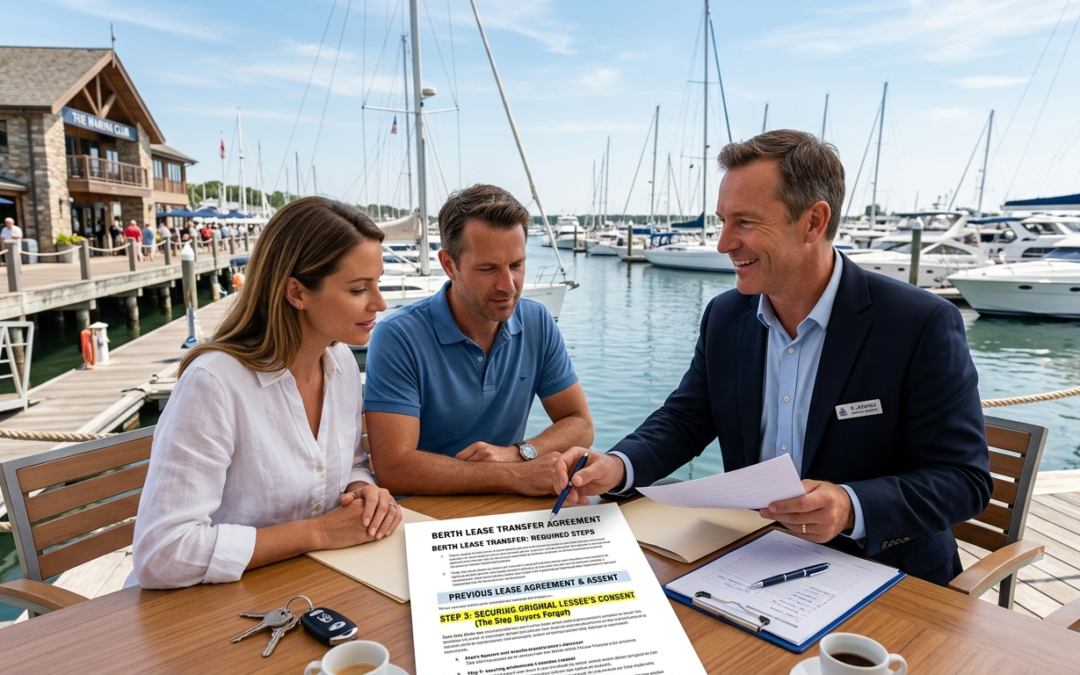
Most buyers who purchase a floating home in Sausalito or Marin spend a lot of energy focused on the home itself — the HCD title, the financing, the inspection, the closing costs. What they don’t always think about is the slip the home is sitting in. A floating home doesn’t own its berth; it occupies it under a lease agreement with the marina, and when the home sells, that lease has to transfer to the new owner. A berth lease transfer sounds straightforward until you’re three weeks from your target close date and the marina hasn’t approved your application yet.
What Is a Berth Lease?
A berth lease is the legal agreement between a floating home owner and the marina that governs the right to occupy a specific slip. It covers monthly moorage fees, utility hookups, maintenance responsibilities, marina rules, and the conditions under which the lease can be assigned or terminated. Without a valid berth lease, a floating home has nowhere to float — or at least nowhere legal and connected to water, power, and sewer.
The lease is separate from the home itself. When you buy a floating home, you’re buying the structure and its HCD title. The berth comes with its own agreement, its own landlord, and its own approval process. The two transactions run in parallel during escrow, and both have to be resolved before the file can close.
Why the Berth Lease Transfer Gets Overlooked
Buyers coming from a traditional real estate background aren’t used to thinking about the land separately from the structure. When you buy a house, the lot comes with it. When you buy a floating home, the slip does not. It’s a leasehold interest that has to be negotiated and transferred independently, and many first-time floating home buyers don’t fully grasp that distinction until they’re already in escrow.
Agents who don’t specialize in floating homes sometimes underestimate the marina’s role in the transaction as well. A marina isn’t just a passive party that rubber-stamps the new tenant. Some marinas have income requirements, financial disclosures, background checks, or waitlists for certain slip sizes. The approval process is the marina’s call, and no amount of pressure from buyers, sellers, or escrow officers speeds it up if the marina isn’t ready to move.
Starting the berth lease assignment early, ideally in the first week after escrow opens, is one of the most important things a buyer and their escrow team can do to protect the closing timeline.
How the Berth Lease Transfer Works
The process begins when the seller notifies the marina of the pending sale and requests an assignment package for the buyer. Most marinas have a formal application that the incoming tenant must complete, along with supporting documentation like proof of income, bank statements, or references. Some marinas in Sausalito and Marin also require a personal interview or a meeting with a board or committee before approving a new tenant.
Once the buyer submits the application, the marina reviews it on their own schedule. There’s no legal obligation for a marina to move quickly, and some take two to four weeks to complete their review. If the application is incomplete or the buyer doesn’t meet the marina’s criteria, the process starts over.
When the marina approves the new tenant, they issue a lease assignment document that transfers the existing lease from the seller to the buyer. That document becomes part of the escrow file, and the floating home escrow cannot close without it. We track the lease assignment from the moment the file opens and stay in regular contact with the marina so nothing sits idle waiting on a response.
What’s Actually in a Berth Lease Assignment
The assignment document isn’t just a name change on an existing agreement. It typically includes the buyer’s acknowledgment of the full lease terms, any updated fee schedules, the marina’s consent to the transfer, and confirmation that the seller has no outstanding moorage fees or violations. Some marinas also require a new lease to be executed rather than a simple assignment of the old one, which means the buyer is agreeing to potentially updated terms rather than just stepping into the seller’s shoes.
Buyers should read the lease carefully before signing. Monthly moorage fees, rules around subletting or renting the home, restrictions on modifications to the slip or the home’s exterior, and the conditions under which the marina can terminate the lease are all worth understanding before you close. Your escrow officer can flag what’s in the assignment documents, but reviewing the full lease terms with your own attorney is always a reasonable step for a transaction of this size.
Marina Approval Issues That Can Delay or Complicate a Sale
Most berth lease transfers proceed without a serious problem, but a few scenarios can complicate things. A buyer who doesn’t meet the marina’s financial requirements may need to negotiate with the marina or restructure the application. A marina undergoing ownership changes or management transitions may have a slower-than-usual approval process. And in rare cases, a marina may have a policy that limits the number of tenants who can rent out their floating homes, which affects buyers who intend to use the property as a rental.
Sellers occasionally have outstanding moorage balances, unpaid fees, or unresolved lease violations that have to be cleared before an assignment can proceed. We catch these issues early in the escrow process by requesting a ledger from the marina at the outset of the transaction, which is far better than discovering a problem in the final week before close.
The real estate escrow framework that most buyers are familiar with doesn’t have an equivalent step, which is part of why the berth lease transfer catches people off guard. It’s a landlord approval process embedded inside a property sale, and it requires coordination that goes beyond standard escrow mechanics.
How Berth Lease Transfer Fits Into the Full Closing Timeline
A floating home sale involves several parallel tracks running at the same time: the HCD title transfer, the lender’s security agreement if financing is involved, the personal property tax clearance, and the berth lease assignment. All of them have to be completed before escrow can close, and none of them wait for the others.
The HCD title transfer has its own processing time. Lender documents have their own requirements and timelines. Personal property tax clearances depend on how current the county’s records are. And the marina moves on its own schedule entirely. An experienced escrow officer manages all four tracks simultaneously and flags potential bottlenecks before they become closing delays.
We build the berth lease assignment into the timeline from day one. The marina gets notified immediately when a file opens, the seller is asked to request the assignment package right away, and we follow up regularly throughout the process. It’s not a step we treat as an afterthought, because in our experience it’s the one most likely to affect the close date if it doesn’t get attention early.
The manufactured home escrow process shares some similarities in terms of managing an HCD title alongside a land lease or space rental agreement, and buyers exploring both property types will recognize the parallel. In both cases, the key is understanding that ownership of the structure and rights to the land or slip are two separate legal relationships that both need to be resolved at closing.
FAQs
Can a marina refuse to approve a berth lease transfer?
Yes. Marinas have the right to approve or deny new tenants based on their lease criteria, which may include financial qualifications, background checks, or adherence to marina rules. A denial doesn’t automatically kill the sale, but it does require the buyer and seller to address the issue before escrow can close.
What happens to the berth lease if the floating home sale falls through?
If escrow cancels before the berth lease assignment is finalized, the lease remains with the seller and the assignment process stops. The marina is notified, the application is withdrawn, and the slip stays under the seller’s name.
Is monthly moorage included in the purchase price of a floating home?
No. Moorage fees are an ongoing monthly obligation the buyer assumes when they take over the berth lease. They’re separate from the purchase price of the home and can range from a few hundred to several thousand dollars per month depending on the marina, the slip size, and the location.
Can a buyer negotiate the berth lease terms when they take over?
In most cases, the buyer assumes the existing lease terms rather than renegotiating from scratch. However, if the marina is issuing a new lease rather than assigning the old one, there may be some opportunity to discuss specific terms. Your escrow officer can clarify what the marina is requiring in your specific transaction.
How far in advance should the berth lease transfer be started?
As soon as possible after escrow opens. Waiting until other conditions are cleared before contacting the marina is one of the more avoidable ways to push a close date back. We initiate marina contact in the first week of every floating home file we open.
Do all floating home marinas in Sausalito have the same approval process?
No. Each of Sausalito’s marinas has its own lease terms, application requirements, and approval timelines. Some are more straightforward than others, and working with an escrow officer who has relationships with the local marinas makes a meaningful difference in how smoothly that part of the process runs.
Don’t Let One Overlooked Step Delay Your Close
The berth lease transfer is manageable when it’s planned for from the start. Our team at Bay Area Escrow coordinates every piece of a floating home transaction, including the marina approval process, so nothing falls through the cracks at the wrong moment. Call us at (925) 831-9099 or contact our escrow team to open your file and get started on the right foot.